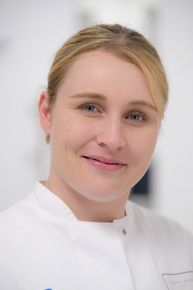
Following my degree in biology, I pursued a PhD focusing on human stem cells at the University of California San Francisco (UCSF) and Stanford University. I joined the CeRA in 2008 to investigate the molecular makeup of the spermatogonial stem cell compartment of the testis during development and in cases of male infertility.
Our research within the CRU326 is focusing on the molecular alterations of the spermatogonial compartment in men with impaired sperm production, applying single cell RNA sequencing and quantitative marker profiling. As member of the ORCHID-NET consortium and ReproTrack.MS, we are focusing on fertility preservation measures for boys. To this end, we seek to understand the molecular and cellular changes associated with spermatogonial maturation from birth, through puberty and to the adult.
As part of CRC1748, in collaboration with Prof. Sara Wickström at the Max-Planck-Institute for molecular Biomedicine in Münster, we aim to elucidate an hitherto unknown interplay between architectural and mechanical properties of the spermatogonial stem cell niche. Our focus is on men with severe infertility (cryptozoospermia). Analyses of their testicular tissues will uncover the likely pathological relationships between mechanoactivation of the spermatogonial stem cells viatranscriptional and epigenetic alterations affecting germ cell differentiation.
Within ContraPur, we expand the scientific foundation for the future development of a novel, non-hormonal contraceptive for men. We investigate the biological mechanisms underlying sperm transport through the seminiferous tubules of the testis. This transport is mediated by the peritubular myoid cell, which are enclosing the seminiferous tubules. To identify key regulatory pathways, we use OMICS approaches and results will subsequently be validated using an established cell culture system.
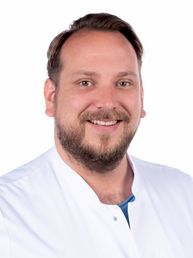
Dr. med. Jann-Frederik Cremers Assistant Medical Director Specialist for urology, andrology and tumour therapy Tel.: +49 (0)251 83 56095 E-Mail: Jann-Frederik Cremers ResearchGate
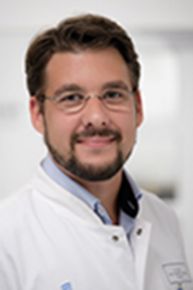
I am an urologist and andrologist and am a senior physician responsible for the surgical part of the Centre of Reproductive Medicine and Andrology. In my office hours I see patients with different andrological problems. One focus here are fertility disorders, which can have very different causes. As the responsible surgeon, I perform operations such as microsurgical testicular sperm extraction (mTESE) on patients with azoospermia. These sperm can then be used in the frame of artificial reproductive treatments. Thanks to the mTESE, many couples have the chance to fulfill their wish for parenthood. Scientifically, I am working in close collaboration with Prof. Dr. Neuhaus as I am interested in unveiling the underlying molecular mechanisms associated with impaired spermatogenesis, as this knowledge can perspectively help to improve the treatment of our patients.
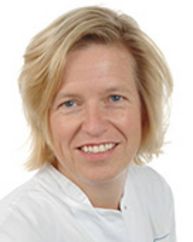
Dr. med. Claudia Krallmann Assistant Medical Director Specialist for urology, andrology and general medicine Tel.: +49 (0)251 83 56095 E-Mail: Claudia Krallmann
After completing my medical studies and doctorate in Münster, I obtained my specialist qualifications in urology and general practice. I have worked at CeRA since 2006, completing further training in andrology and sexual medicine during this time and am currently a senior physician at the Department for Andrology, which sees around 4,500 patients each year with various andrological issues. I see myself as an important interface between the clinic's patients and researchers. Issues from the clinic and science can be discussed on an ongoing basis, and research approaches can be examined for their clinical relevance. This translational research approach, 'from bench to bedside and back', connects my work with the CeRA working groups and the reproductive genetics department. Priority topics include fertility protection in the pre-pubertal age group and the most severe forms of infertility.
Dr. med. Florian Schneider Specialist in Pediatrics and Adolescent Medicine, Neonatology and Diabetology Tel.: +49 (0)251 83 46031 E-Mail: Florian Schneider
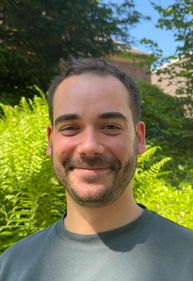
As I was finishing my degree back in Argentina, I was determined to work on Reproduction. Due to this, I started my research path in immunology of pregnancy, transitioned to the clinics to be trained as an embryologist, and finally returned to science to pursue my PhD in Münster. During that time, I focused on understanding testis development at single-cell RNA level, with my main interest being spermatogonial stem cell differentiation. I continued working on the same project as a Medical Scientist within ReproTrack.MS, focusing on the somatic cell compartment, and I am a board member of the Network for Young Researchers in Andrology (NYRA). Now, I joined Reproduction.MS as a post-doctoral researcher studying how mechanical forces and the testicular micro-environment affect the spermatogonial stem cells and alter the molecular cues required for correct spermatogenesis in cryptozoospermic patients.
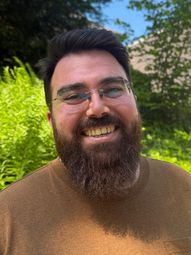
After completing a Bachelor’s and a Master’s degree in Biochemistry, Molecular and Cellular Biology, I pursued a PhD in reproductive biology at the University of Mons (Belgium). My doctoral research focused on the role of the sperm protein CRISP2 in sperm-egg interaction and its characterization in humans. This work sparked a lasting curiosity for the molecular mechanisms governing fertilization and the regulation of reproductive processes. Since February 2026, I have been working as a postdoctoral researcher , within the ContraPur project funded by the BMFTR. This project aims to unravel the purinergic signaling network in the testis, with a particular focus on testicular peritubular myoid cells, the contractile cells surrounding seminiferous tubules. In a context where male contraception is gaining increasing attention, this research contributes to the development of innovative strategies for shared contraceptive responsibility.
I developed an interest in reproductive research whilst I was still studying biology. As part of my Master’s thesis, I therefore worked in the Neuhaus research group on epigenetic modifications in human testicular stem cells from older and infertile men, with the aim of gaining a better understanding of male reproductive biology and identifying any age- and infertility-related changes. The subject of my current PhD is postnatal testicular development. I am particularly interested in the differentiation of spermatogonial stem cells from birth to puberty, as well as in the methylated DNA regions of the individual germ cell stages during development.
Reproductive biology has fascinated me since the beginning of my Master’s studies, and I am currently completing my thesis at the CeRA. In my research project, I primarily work with human samples and perform immunohistochemical staining on testicular tissue. In my thesis, I want to better understand the effects of gender-affirming hormone therapy (GAHT) in young transgender adult women. I am particularly interested in changes within the somatic cell compartment and their association with the reduction of germ cells across different stages of differentiation. This project is highly relevant in the context of fertility preservation at a young age and provides improved counselling as well as individualized patient care.
I'm currently pursuing a M.Sc. in Biosciences and have always been interested in the field of reproductive medicine. As part of my master’s thesis, I am investigating the effects of puberty blocker treatment on testicular tissue in transgender girls. My research focuses on germ cells and the somatic cell compartment. The goal is to promote a better understanding of reproductive health and to improve the gender-affirming care for transgender adolescents, particularly with regard to fertility preservation.
Marco Rüther Medical Doctoral Candidate E-mail: Marco Rüther
As part of my medical studies, I am writing my doctoral thesis here at the CeRA and also work as a student research assistant. In my project, I am investigating mechanisms ensuring the integrity of the male germline. To this end, I am examining testicular tissue at various stages of development in order to ultimately gain new insights into human male fertility.
Antonia Wernke Medical Doctoral Candidate E-Mail: Antonia Wernke
As part of my medical doctoral thesis, I chose to pursue an experimental research approach in Nina Neuhaus’s research group in order to gain a broad range of insights into scientific practice. In this role, I work in an interdisciplinary team and collaborate closely with computer scientists to develop automated methods for histological diagnosis. My research focuses on the effects of tissue changes and micromechanical stress on spermatogonial stem cells, aiming to better understand the aetiology of cryptozoospermia.
I am working as a technician in the histology laboratory. My work in this group involves many immunohistological stainings for the Androprotect program. This also includes the analyses of the tissue samples using a quantification program and data processing. I also support the clinic with the processing of tissue samples for the fertility center.