
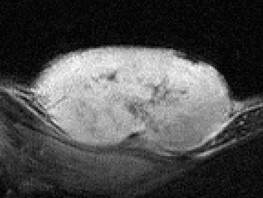
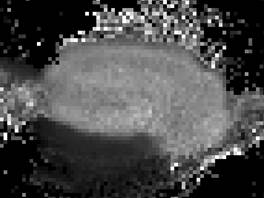
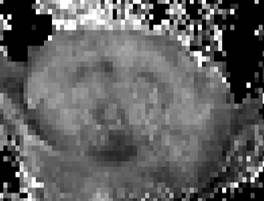
Evaluation of the albumin-binding contrast agent gadofosveset for imaging endothelial permeability in tumors
In this project, endothelial permeability is investigated and modulated in a tumor model in vivo. Albumin-binding gadolinium chelates are used as contrast agents for magnetic resonance imaging to non-invasively and dynamically visualize changes in endothelial permeability over time as the tumor grows. Since increased endothelial permeability is often associated with enhanced tumor growth as well as aggravated metastasis, the progression of endothelial permeability is compared in two murine breast cancer models of varying degrees of malignancy. Furthermore, the aim is to demonstrate that this established imaging technique is also suitable for visualizing therapeutic modulations of endothelial permeability. The endothelial-stabilizing effect of angiopoietin-1 will therefore be investigated dynamically over time using MRI, as will the hyperpermeability induced by rhodocetin (in collaboration with Prof. Dr. Eble, Institute of Physiological Chemistry and Pathobiochemistry).