

Resistance-appropriate Helicobacter pylori eradication and antibiotic stewardship
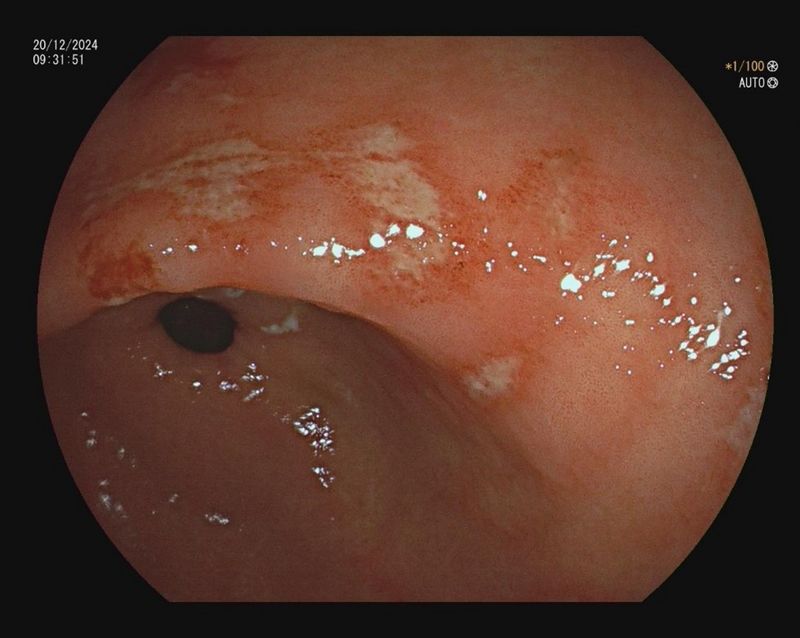
Foto: Endoskopie Datteln
Endoskopische Ulcera sind u.a. eine Indikation für eine Helicobacter pylori Diagnostik. Im positiven Fall streben wir im Rahmen der Studie im Gegensatz zur Leitlinie keine empirische Therapie, sondern eine resistenzgerechte Therapie an.

An infection with H. pylori (HP) is often diagnosed as the cause of abdominal diseases. The resulting eradication therapy is usually carried out according to the DGVS 2022 guideline (LL) using the ‘quadruple regimen’ (Pylera®), although this is based on metronidazole, among other things, to which high resistance rates are known in some regions. The LL only provides for resistance testing - which is possible in principle - after one or two treatment failures.

We want to question this procedure and instead propose a more comprehensive resistance determination for resistance-appropriate antibiotic therapy.

The aim of the study is comprehensive resistance testing of samples with an HP-positive urease test for the initiation of resistance-appropriate therapy. The idea is that this approach will prevent treatment failure and the associated need for repeat diagnostic sampling. In addition, we can collect regional resistance data, save antibiotics and positively influence the development of resistance in the sense of antibiotic stewardship. Further information can be found in the German Register for Clinical Trials: https://drks.de/search/de/trial/DRKS00033330/details

De-labelling of anamnestic ‘penicillin allergy’ by oral exposure to amoxicillin: a multicentre prospective research project for the evaluation of allergies to ß-lactam antibiotics

Foto: St. Vincenz-Krankenhaus Datteln

This multicentre, prospective study aims to evaluate the prevalence of falsely assumed penicillin allergies and to expand the evidence base for de-labelling strategies in order to establish a standardised procedure that can also be used in everyday clinical practice beyond the study period. Approximately 10% of adult and 6% of paediatric patients report a history of penicillin allergy, while the actual prevalence of true allergies is significantly lower. This misclassification can lead to suboptimal treatment strategies and favour the development of antibiotic resistance.

Patients with a history of penicillin allergy will be included in the study using the PEN-FAST score (for adults) and a paediatric risk score to identify low-risk groups for anaphylactic reactions. Participants will receive an oral challenge with amoxicillin under careful clinical supervision. The analysis includes both quantitative and qualitative data on medical history, adverse drug reactions (ADRs) and patient compliance.

It is to be expected that the majority of patients classified as allergic do not actually have an allergy, which could potentially lead to de-labelling. The results of the study could have important implications for clinical practice and public health, particularly in terms of optimising antibiotic therapy and reducing antibiotic resistance. Further information can be found in the German Register of Clinical Trials: https://drks.de/register/de/trial/DRKS00035664/preview

Guidelines for prescribing antibiotics for outpatient medical care in the Datteln/Waltrop region

As bacteria in different regions have different patterns of resistance to antibiotics, local cross-speciality and cross-sector approaches are particularly important. Specialists in private practice from Vestnet e.V., together with inpatient colleagues from Vestische Kinder- und Jugendklinik Datteln and St. Vincenz-Krankenhaus Datteln, coordinated by Priv.-Doz. Dr Anke Hildebrandt, developed regional anti-infective guidelines for the Datteln and Waltrop region. The recommendations are based on the latest scientific findings and recommendations from relevant professional associations and specifically take into account local resistance and the needs of local colleagues.

Decisions on antibiotic therapy are often difficult, vary and therefore lead to uncertainty. The guidelines offer various medical specialities practical support for the treatment of adults and children and at the same time promote cooperation. Harmonisation of cross-sector prescriptions is intended to create prescribing certainty and achieve greater trust through equal communication with patients. The guidelines for Datteln and Waltrop can be viewed online on the websites of Vestnet e.V. and the ABS network Westfalen-Lippe. Regular updates are planned once a year.

https://vestnet.org/antiinfektiva-leitfaeden

https://www.uni-bielefeld.de/fakultaeten/gesundheitswissenschaften/ag/ag2/antib/praxis-andernorts/