
Research
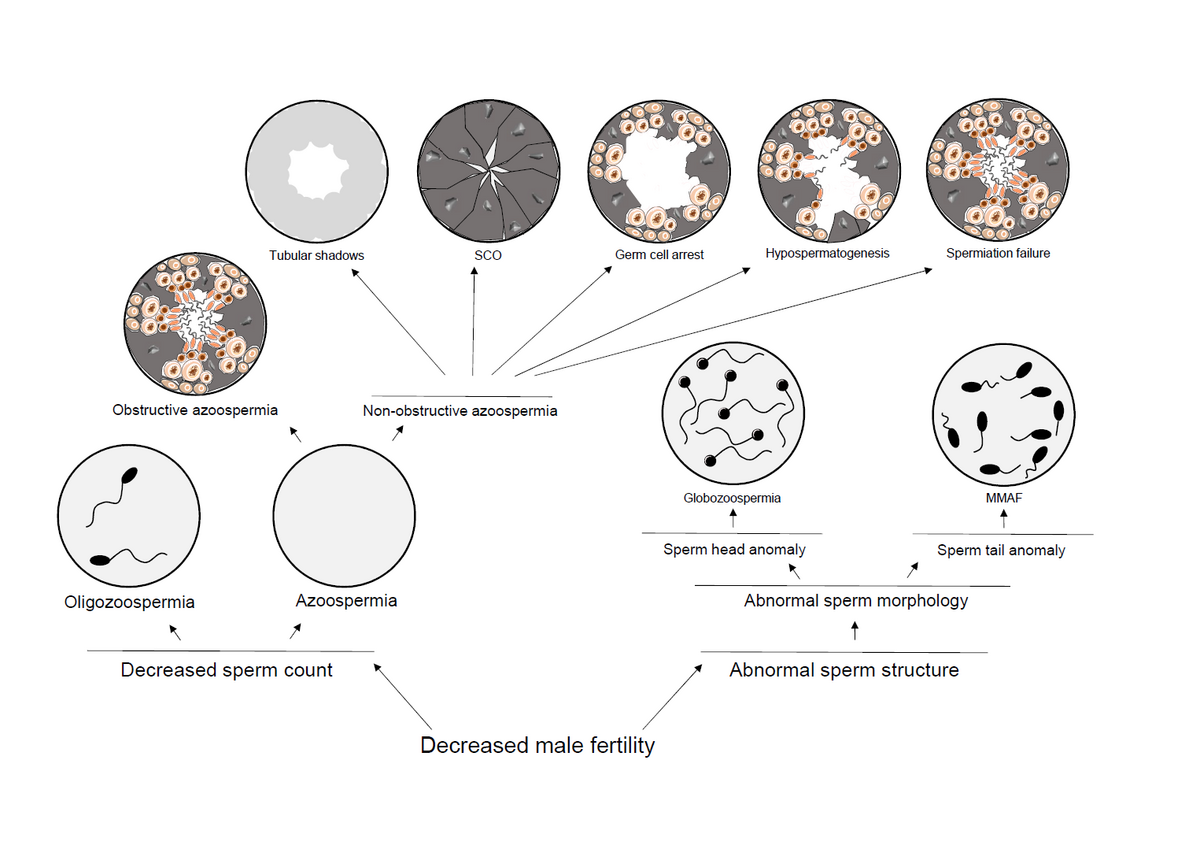
More than 15% of all couples are infertile. In half of these couples, a male factor contributes to the infertility. This is commonly associated with a reduced quality of sperm production, notable as low sperm count, reduced motility, and/or a decreased number of sperm with normal morphology (Figure 1).
Currently, genetic causes can only be identified in 5% of all men in infertile couples. In more than 70% of men, the underlying cause of infertility remains unclear.
For this reason, we are dedicated to identifying new genes, in which variants cause impaired sperm production and, thus, infertility. To this end, we use genome analyses for our translational research (Group Tüttelmann), with a focus on meiosis (Group Friedrich), the piRNA pathway (Group Stallmeyer), and epigenetics and gene regulation (Group Laurentino). By employing a wide range of functional analyses including the fruit fly as a model system, we have been able to decipher more than 38 new disease genes in recent years, including a detailed characterisation of the resulting phenotype, their clinical relevance, and many molecular mechanisms.