


Project area B – Sperm function and early development

B01 Sperm flagella dysfunction related to defects of inner dynein arms and associated structures
To reach and fertilise the egg, sperm use their flagellum as a propeller. Genetic variants disrupting the expression, assembly, and/or function of flagellar motor proteins (e.g., inner dynein arms) do not only impair sperm motility and male fertility, but may also affect motile cilia, causing primary ciliary dyskinesia (PCD). Combining genetic, molecular, imaging, and functional approaches, the cell type-specific role of inner dynein arms in sperm flagella and motile respiratory cilia will be defined – in health and disease. Translating the findings into the clinics will improve diagnosis and care for men with inner dynein arm defects, addressing both infertility and PCD.
Principal investigator
B02 Deciphering the role of adenylate kinases and microtubule inner proteins in male fertility
Flagellar and ciliary motor proteins use ATP as energy source, rendering the maintenance of adenine nucleotide homeostasis essential for sperm motility and male fertility. This project aims to identify genetic variants affecting adenine nucleotide homeostasis in men with impaired sperm motility/motile ciliopathies. Thus, the flagellar adenine nucleotide-homeostasis circuit will be elucidated to facilitate the analysis of pathogenic variants underlying male infertility and to characterise the molecular machinery governing flagellar beating at high resolution. The insights gained will aid the diagnosis, counselling, and treatment of affected men.
Principal investigator
Heymut Omran, Prof. Dr. med.
Department of General Paediatrics
B03 Molecular mechanisms of calcium signalling in human sperm
The flagellum of sperm serves not only as a propeller but also as sensory antenna. The flagellar ion channel CatSper translates changes in the environment into changes in swimming behaviour, enabling sperm to locate and fertilise the egg. To this end, CatSper seems to interplay with various other ion channels and molecules that are key for controlling sperm function. This project will unravel the molecular composition, physiological function, and pathophysiological relevance of the flagellar signalling pathways orchestrated by CatSper. This will shed light on the mechanisms underlying seemingly unexplained male infertility, enabling evidence-based treatment.
Principal investigators
Timo Strünker, Prof. Dr. rer. nat.
Centre of Reproductive Medicine and Andrology
Christoph Brenker, Dr. rer. nat.
Centre of Reproductive Medicine and Andrology
B04 In situ structural analysis of the human CatSper-channel complex
Loss of CatSper function is a common channelopathy that leads to male infertility. To shed light on the role of CatSper in human sperm in both health and disease, high-resolution structures of in-cell assembled CatSper as well as its spatial arrangement along the flagellum will be determined, using cutting-edge cryo-electron tomography (cryo-ET) and tailored structure-function analyses. Moreover, by cryo-ET of the channel in sperm from patients lacking the CATSPER2 gene, i.e., the most common cause of CatSper-related infertility, the molecular pathology leading to loss of CatSper function will be elucidated.
Principal investigator
Christos Gatsogiannis, Prof. Dr. rer. nat.
Centre for Soft Nanoscience
Institute of Medical Physics and Biophysics
B05 The role of the MHC for fertilisation and infertility from a fish perspective
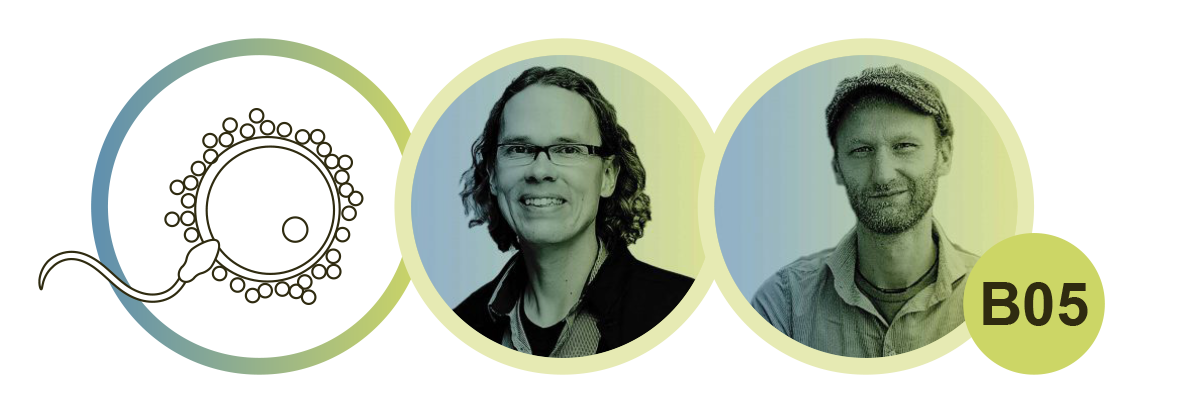
The interaction of sperm and egg and, thus, the fertilisation process seems to involve the major histocompatibility complex (MHC), which is crucial for the initiation of the adaptive immune response. Using two fish models, the relevance of optimal individual MHC diversity for spermatogenesis, sperm function, and sperm-egg interaction will be experimentally tested. This approach is combined with the analysis of human genomic datasets. Thereby, insights on the role of MHC in the fertilisation process and of genetic variants affecting the function of the complex in male infertility will be gained.
Principal investigators
Joachim Kurtz, Prof. Dr. rer. nat.
Institute for Evolution & Biodiversity
Robert Peuß, Dr. rer. nat.
Institute of Integrative Cell Biology and Physiology
B06 Epigenetic regulation of early embryonic development
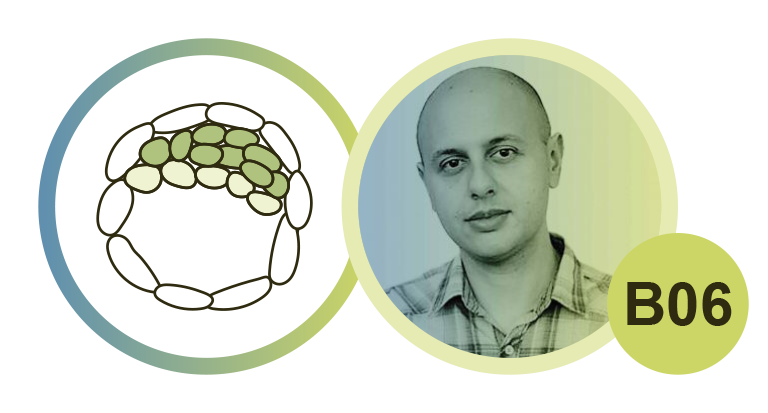
The DNA methylation landscape undergoes significant remodelling during early development, germ cell specification, and gametogenesis. Disruptions in the molecular machinery underlying this critical epigenetic regulation can lead to developmental abnormalities, such as deregulation of transposable elements, defective genomic imprinting, embryonic lethality, and male infertility. This project will decipher the DNA methylation dynamics during embryo dormancy, the underlying regulation and developmental significance of this process, and the potential parallels with the epigenetic reprogramming during primordial germ cell development and gametogenesis.
Principal investigator
Ivan Bedzhov, Dr. rer. nat.
Max Planck Institute for Molecular Biomedicine