


Molecular mechanisms influencing fertilisation and implantation
Prior to an embryo transfer, the blastocyst is currently characterized according to its implantation potential based solely on morphokinetic attributes. Implantation is thought to be an interplay between a blastocyst and the endometrium orchestrated by secreted factors. Finding the association between morphokinetic patterns and biomarkers relevant for embryo quality may improve blastocyst selection and ultimately, the implantation rate and pregnancy rate. One factor secreted by the endometrium, by the embryo itself and from cells surrounding the embryo is microRNA. MicroRNAs are small, noncoding, highly conserved RNAs that do not encode proteins, but rather regulate post-transcriptional gene expression by silencing genes. For this project, we want to correlate microRNA signatures in follicular fluid and embryo culture medium with morphological patterns in the embryonic development via time lapse imaging to shed light on the dialogue between blastocyst and endometrial stroma during implantation.
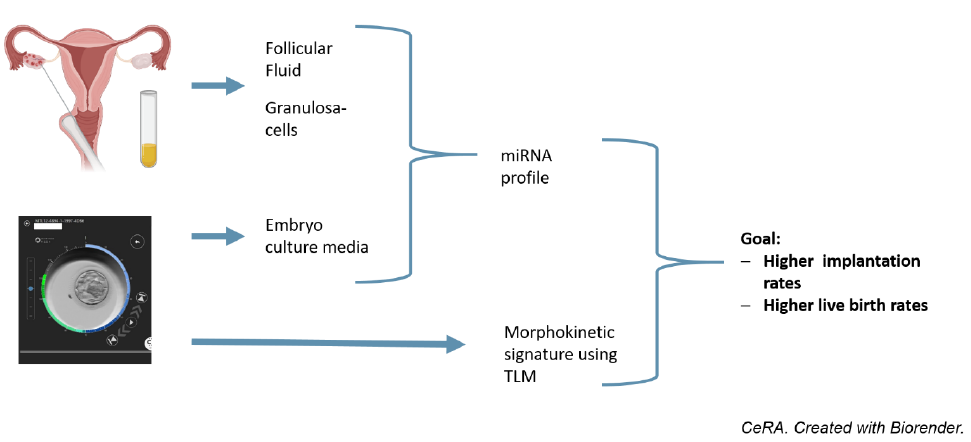
Figure 1. Correlating microRNA signatures of the secreted fluids with the morphological characteristics of the embryo. This project explores the link between miRNA profiles in fluids surrounding the oocyte and the blastocysts with the morphokinetic signatures of embryo development in order to improve the selection of the embryo with the highest implantation potential.