


Ion channels in sperm as potential game-changers: Millions in funding to develop new contraceptive methods
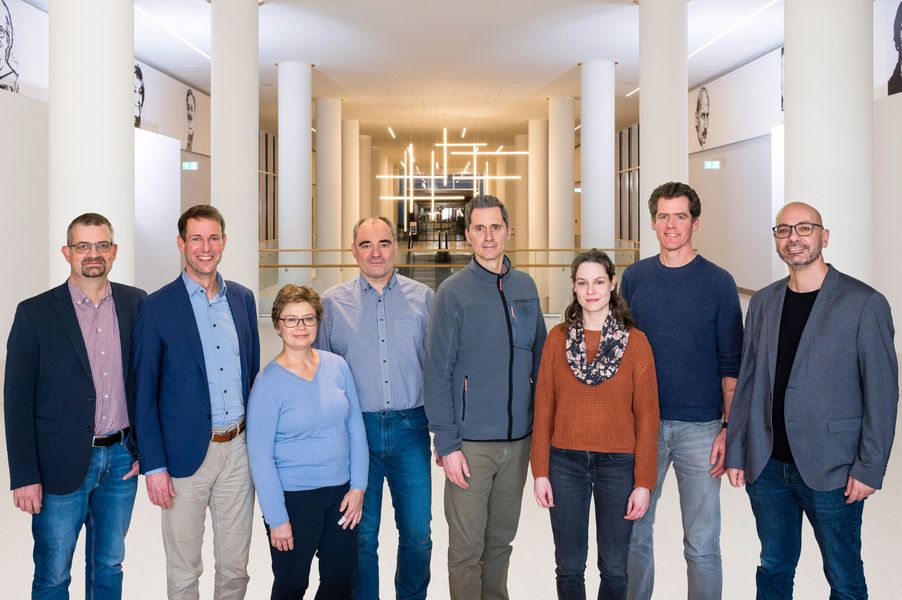
The Contraception.MS team in Münster (from left to right): Prof. Oliver Koch (Institute of Pharmaceutical and Medicinal Chemistry), Prof. Frank Tüttelmann (Centre of Medical Genetics), Prof. Sabine Kliesch (CeRA), Prof. Guiscard Seebohm (Institute for Genetics of Heart Diseases), Prof. Timo Strünker, Dr. Vera Minneker, Dr. Christoph Brenker (all CeRA) and Prof. Christos Gatsogiannis (Center for Soft Nanoscience) (Photo: Uni MS/E. Wibberg)
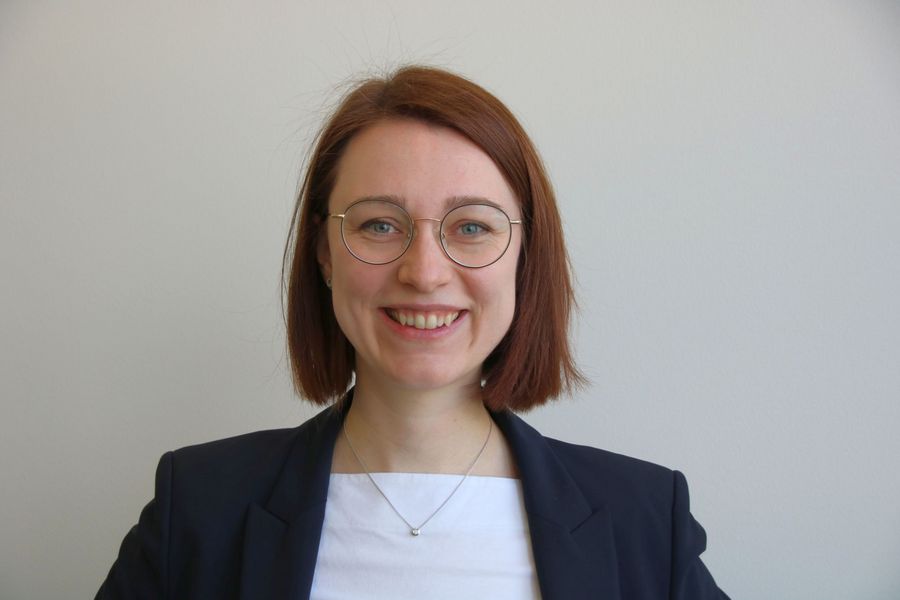
Contraception.MS member in Hamburg: Prof. Louisa Temme from the Institute of Pharmacy at the University of Hamburg. (Photo: Mica Colombo)
Münster (mfm/ts-ajs/cs) - For the past 66 years, the contraceptive pill has been available to women only. To date, no comparable product for men has been available on the market. The Contraception.MS research consortium now aims to investigate new approaches to non-hormonal contraceptive methods for both sexes. The German Federal Ministry of Research, Technology and Space (BMFTR) is providing €3 million in funding for this purpose. Upon receiving funding, the research teams from Münster and Hamburg outline the key areas of their work.
Specifically, the project aims to develop compounds that block important ‘gatekeeper proteins’ known as ion channels in the outer membrane of human sperm. Blocking these channels prevents sperm from fertilising the egg. ‘In future, these compounds could be used as non-hormonal contraceptives by both women and men,’ says Professor Timo Strünker, Contraception.MS coordinator at the Centre of Reproductive Medicine and Andrology (CeRA) at the University of Münster. The two ion channels at the heart of the project are called CatSper and Slo3. They regulate calcium levels in sperm and thereby control their motility, in other words their ability to move. It is crucially important, that both channels are found exclusively in sperm. Compounds that selectively block either of them should therefore cause few, if any, side effects.
To develop these compounds, Contraception.MS brings together researchers from pharmacology, pharmaceutics, structural biology, andrology and genetics. The consortium comprises a team of eight, seven of whom are based at the University of Münster. The group is completed by a scientist from the University of Hamburg.
The research project will employ state-of-the-art technologies, including cryo-electron microscopy. This technology will be used to produce high-resolution 3D images of ion channels, which the team hopes will help understand how channel blockers work at the molecular level. These data will then inform the targeted design of active compounds, with artificial intelligence supporting the process.
The findings generated over the three-year project then provide the basis for the stepwise further development of compounds. Ideally, industry partners will also contribute to this process. Unusually for a project of this kind, communication and broader networking have been built in from the outset. ‘We aim to inform as many people as possible about these new approaches to contraceptive research. We aim to communicate our current research activities transparently and actively involve potential users through interactive formats,’ says Professor Strünker. In addition to Contraception.MS, the BMFTR is funding three other research consortia, each pursuing a different approach to developing new contraceptive methods. ‘Together, we will advance science communication, regularly exchange information about our research activities and work closely together,’ the biochemist explains.