


Connections, cinema, and conversation: Two days spotlighting contraceptive and reproductive research
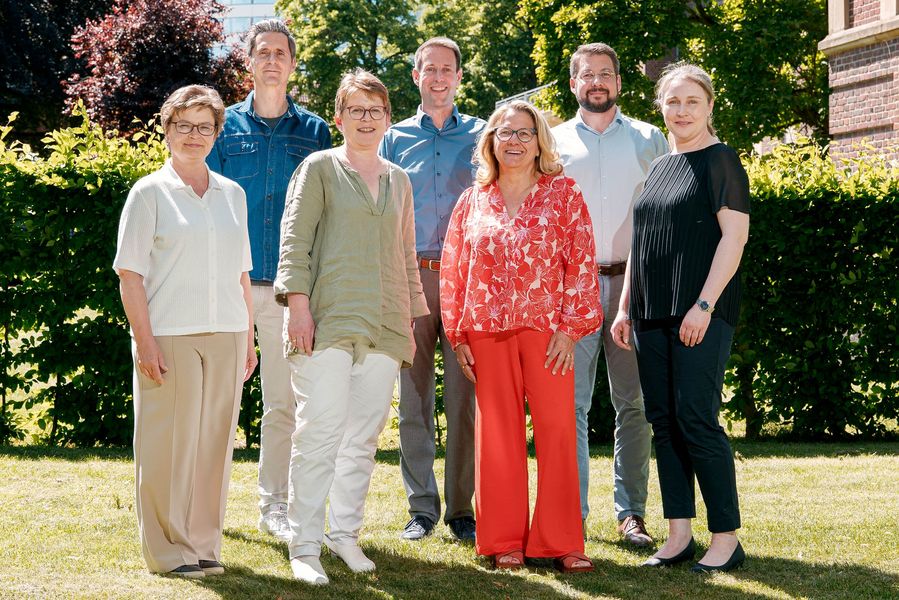
Researchers and politicians met in Münster for two days of intensive discussions on reproductive medicine. Pictured (from left to right): Sabine Kliesch, Timo Strünker (both CeRA), Tanja Machalet (MP, SPD), Frank Tüttelmann (Institute for Reproductive Genetics), Svenja Schulze (MP, SPD), Jann-Frederik Cremers and Nina Neuhaus (CeRA) (Photo: Uni MS/M. Heine).
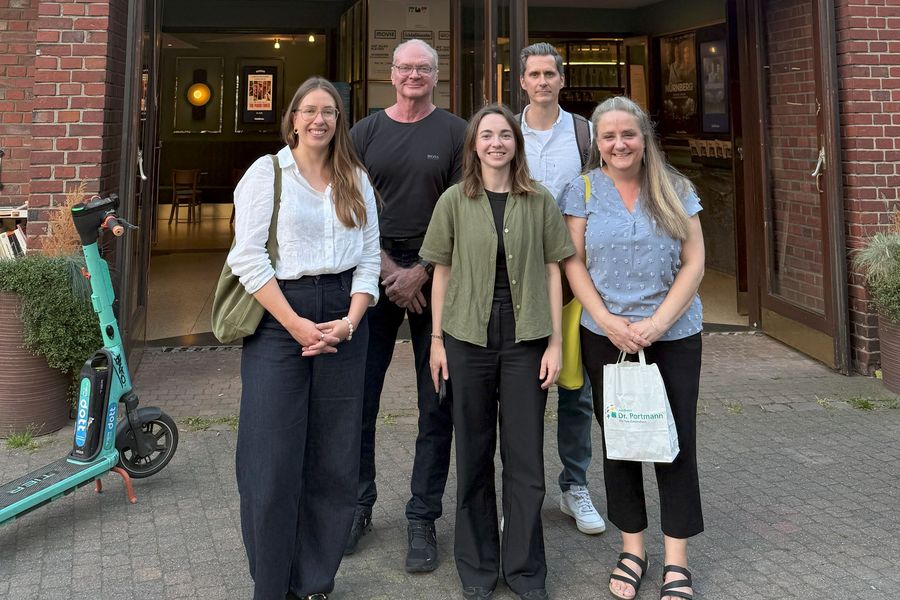
The organisers of the screening of "It’s Different for Girls" were delighted to see a full house at the Schloßtheater. Pictured (from left to right): Mara Scherner (Deutsche Stiftung Weltbevölkerung), Michael Zitzmann (CeRA), Jana Pfenning (Better Birth Control), Timo Strünker (CeRA) and Heather Vahdat (Male Contraceptive Initiative) (Photo: private).
Münster (mfm/ajs/cs) – Contraception, infertility, childbirth: reproductive health covers a wide range of issues and affects everyone. According to the World Health Organization (WHO), around one in six people of reproductive age will experience infertility at some point in their lives. Members of the Reproduction Alliance research network at the University of Münster spent two days discussing topics such as contraception and reproductive health with national and international partners.
Together with the non-profit association Better Birth Control and the Male Contraceptive Initiative, Reproduction Alliance first hosted an interactive cinema evening at a packed Schloßtheater in Münster. The event focused on key questions about the future of contraception: Why does responsibility for contraception still fall predominantly on women? How advanced is research into new methods of contraception? And what are the chances of developing an oral contraceptive pill for men? Following a welcoming address by Member of the German Bundestag Svenja Schulze, the documentary "It’s Different for Girls" was screened. Afterwards, Prof. Timo Strünker and Prof. Michael Zitzmann from the Centre for Reproductive Medicine and Andrology (CeRA), Heather Vahdat from the Male Contraceptive Initiative, Jana Pfenning from Better Birth Control, and Mara Scherner from the Deutsche Stiftung Weltbevölkerung discussed current developments, societal challenges, and new approaches in contraceptive research with the audience.
On the second day of the event series, CeRA researchers welcomed Svenja Schulze once again, along with Member of the German Bundestag Dr. Tanja Machalet and other experts. The attendees gained insights into current research activities in Münster. The main focus was on the necessary conditions for scientific findings to translate from research labs into clinical application, to enable new contraceptive methods for men. The participants agreed that, in particular, an ongoing dialogue between policy makers, researchers, doctors, and those affected is essential for advancing reproductive research and highlighting its relevance to society.