


Local Fine-Tuning of AI-Based Diagnostic Algorithms for Myocardial Infarction to Improve Site-Specific Predictive Accuracy
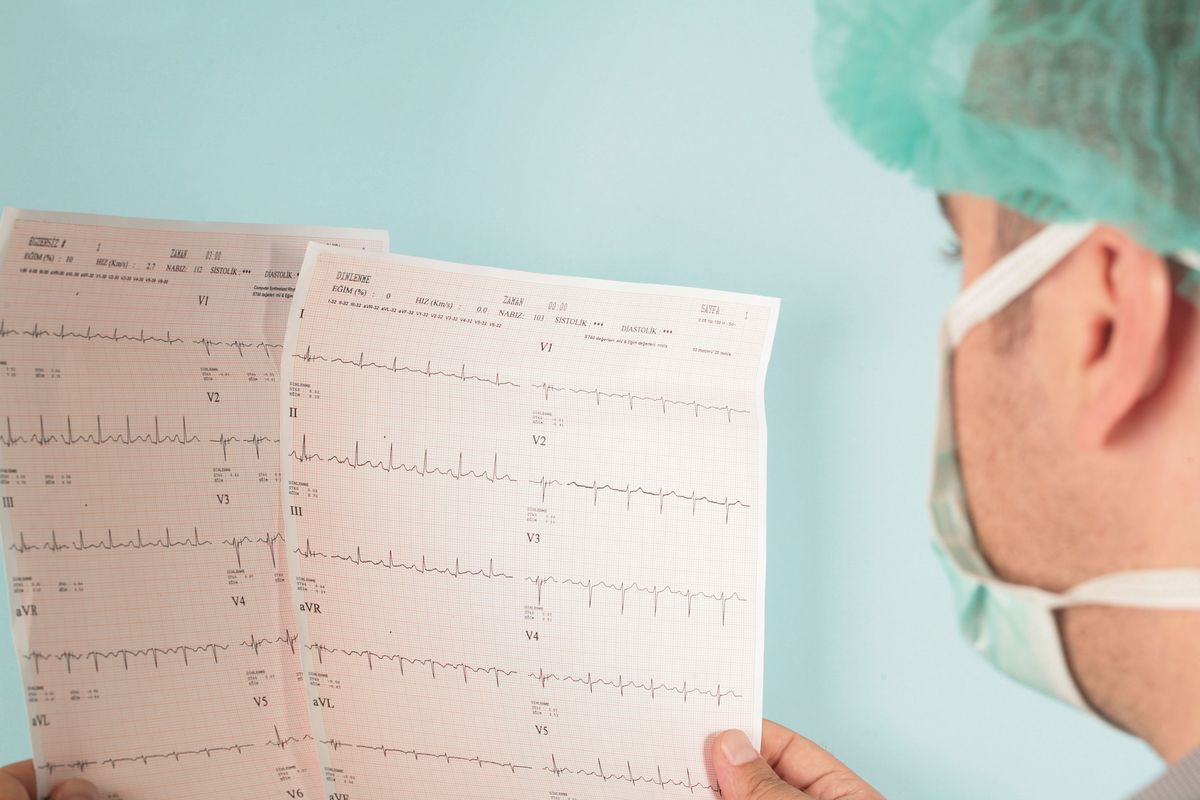
Within the framework of the “Special Research Funding 2025: Diagnosis and Therapy of Coronary Heart Disease (CHD) / Myocardial Infarction”, this project aims to make myocardial infarction diagnostics in the emergency department faster and more reliable. The project builds on a recently published AI-based approach that is able to derive indications of acutely treatable coronary artery occlusions or high-grade stenoses directly from the admission ECG obtained in the emergency department. Especially in cases without clear ECG changes and when myocardial infarction biomarkers such as high-sensitivity troponin T (hs-TnT) are not yet conclusive, the additional AI-based “second opinion” may potentially save valuable time. In initial studies, the model’s diagnostic accuracy was close to that of hs-TnT and exceeded conventional physician-based ECG interpretation. Moreover, the AI detected myocardial infarctions at time points when initial troponin levels were still low.
To ensure that this potential can be reliably utilized across different clinical settings, the model will now be evaluated and further developed in a large international patient cohort. Using serial hs-TnT measurements and detailed coronary angiography findings, the performance of the AI can be assessed not only overall but also stratified by the severity of coronary ischemia and by clinical site. The objective is to calibrate the AI predictions in a way that better reflects the characteristics of specific patient populations and local healthcare environments.
A key focus of the project is site-specific algorithmic fine-tuning. AI models may lose accuracy when applied to new patient populations because they inadvertently retain patterns from the original training cohort that may not be relevant elsewhere. Through targeted retraining using selected local ECG data, the AI is intended to preserve its core diagnostic capabilities while improving predictive performance at individual sites. The project will also investigate how many local data sets are required to achieve a meaningful performance gain, whether additional data increase overall model robustness or primarily lead to site-specific adaptation, and how temporal changes in the data (“data drift”) can be prevented or mitigated.
In the long term, the project aims to pave the way for a safe, fair, and efficient use of AI-supported ECG diagnostics in the emergency department. Improved risk stratification already at the initial patient encounter has the potential to avoid unnecessary diagnostic procedures, allocate limited resources more effectively, and shorten the time to appropriate treatment.
Contact: Dr. med. Antonius Büscher, Lucas Plagwitz, M.Sc.

Funded / supported by the German Heart Foundation (Deutsche Herzstiftung e.V.)