
How does the innate immune system prevent protective responses from becoming pathogenic?
Our laboratory investigates inhibitory receptors that control myeloid cell activation and maintain the balance between protective immunity and inflammatory tissue damage. We are particularly interested in how these regulatory pathways shape neutrophil and macrophage responses during infection, metabolic stress and chronic inflammatory disease.
Inhibitory receptors in innate immune regulation
Inflammatory responses are essential for host defense and tissue repair, but they must be precisely regulated to prevent excessive or inappropriate immune activation. Innate immune cells continuously integrate activating and inhibitory signals, and its balance determines the nature and magnitude of the resulting response.
Our research focuses on inhibitory receptors expressed by myeloid cells and how they shape cellular activation, effector functions and inflammatory responses. These germline-encoded receptors act as critical regulators of innate immunity by setting activation thresholds and modulating signaling pathways in response to environmental cues. Loss or functional impairment of these regulatory mechanisms can promote excessive inflammation, tissue damage and disease.
We aim to understand how inhibitory receptor signaling is regulated under different inflammatory conditions and how changes in these pathways influence neutrophil and macrophage function.
Neutrophil activation and extracellular traps
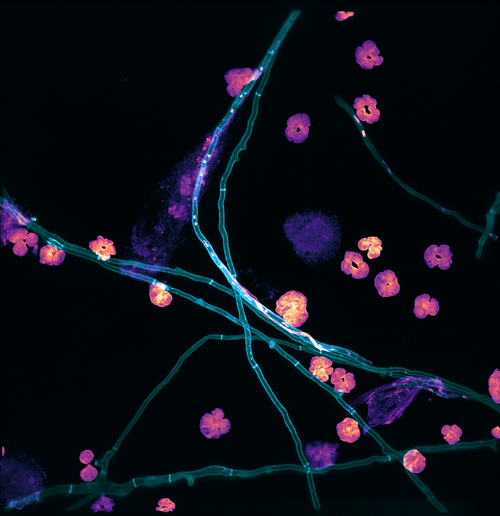
Neutrophils provide rapid protection against invading microorganisms through phagocytosis, production of reactive oxygen species and the release of neutrophil extracellular traps (NETs). However, uncontrolled neutrophil activation and excessive NET formation can also promote tissue injury and sustain sterile inflammation.
We investigate the molecular mechanisms that distinguish protective from pathological neutrophil responses. In particular, our work has identified the inhibitory receptor MICL (CLEC12A) as a regulator of neutrophil activation and NET-driven inflammation (Malamud et al., Nature 2024). By studying how neutrophils sense inflammatory and tissue-derived signals, we aim to define the checkpoints that prevent their antimicrobial effector mechanisms from becoming detrimental to the host.
Inhibitory receptors in inflammatory disease
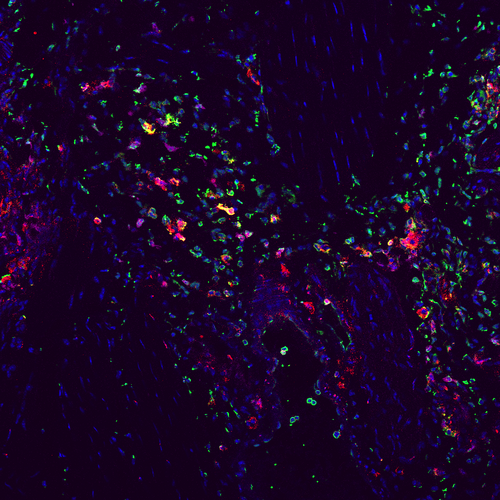
Chronic inflammatory environments profoundly alter the phenotype and function of innate immune cells. We are interested in understanding how inhibitory receptors are regulated under these conditions and whether disruption of these pathways contributes to disease progression.
Our current work examines inhibitory immune signaling in settings including metabolic inflammation, cardiovascular disease, infection and cancer. Particular emphasis is placed on how metabolic stress and inflammatory mediators alter neutrophil and macrophage function and modify their responses to subsequent challenges.
Using genetic mouse models, cellular and molecular approaches, high-dimensional immune profiling and imaging, we aim to identify the molecular and cellular mechanisms that control inhibitory receptor function in different inflammatory environments. Ultimately, we seek to determine whether these pathways can be therapeutically targeted to selectively restrain pathological inflammation while preserving protective immune responses.