Translational Centre for Inflammation (TRACI)
University research and treatment centre
Our centre combines research and treatment in the field of inflammatory diseases. We research how and why inflammation processes are different in various organs and diseases. Our goal is to identify mechanisms that can serve as starting points for carrying out targeted interventions in the complex dynamics of the immune system, and using these to develop diagnostic methods and personalised immunomodulatory therapies to improve the treatment of various diseases.
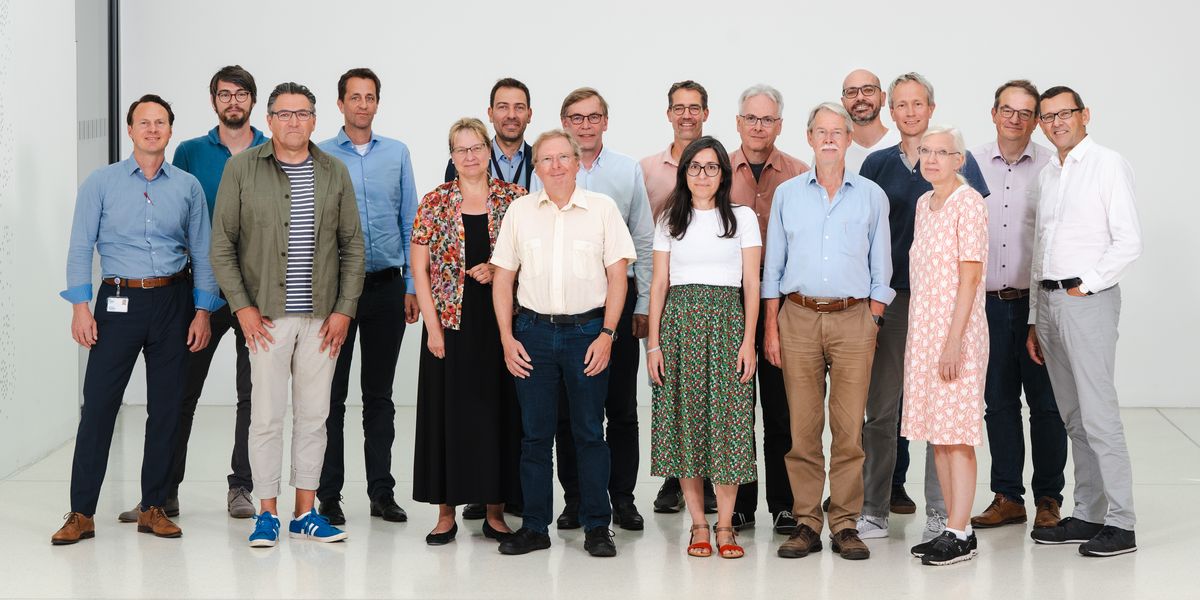
Steering Committee:
- Univ.-Prof. Dr. med. Michael Schäfers (Spokesperson), Nuclear Medicine & Molecular Imaging
- Univ.-Prof. Dr. rer. nat. Petra Dersch, Infectiology
- Univ.-Prof. Dr. med. Johannes Roth, Immunology
- Univ.-Prof. Dr. med. Kerstin Steinbrink, Dermatology
- Univ.-Prof. Dr. med. Alexander Zarbock, Anaesthesiology and Intensive Care
Translational research on inflammation
Many common diseases are accompanied by inflammatory responses by the immune system, which significantly influence the progression of the disease. When the body is in a state of healthy balance, these immune responses see off pathogens, limit tissue damage and are part of healing processes. However, autoimmune and vascular diseases, traumas and infections can lead to overshooting inflammation that can permanently affect patients or even be life-threatening. With cancers, on the other hand, the immune system response is suppressed by the tumour cells, rendering it inefficient. Innovative immunomodulating therapies have led to great advances in treatment for acute and chronic inflammatory diseases and for cancers. But a number of challenges remain for the field of medicine: these therapies are often only able to suppress symptoms, and cannot bring about a lasting cure, and they do not work equally well for all patients. Because they suppress the immune system’s mechanisms across the board, they are also associated with risks such as higher susceptibility to infection and tumour formation. Innovative immune therapies that are successfully used to treat cancer can, on the other hand, trigger chronic inflammatory autoimmune diseases.
Gaining a better understanding of the organ-specific characteristics of inflammation processes is one of the keys to intervening in the complex dynamics of the immune system with even greater precision. We investigate such molecular and cellular principles, which can serve as starting points for personalised diagnostic methods and therapies – for example mechanisms that lead to the healing of inflammation, prevent organ damage and protect against systemic spreading, as well as mechanisms that can be used to activate the immune system for tumour therapy. In our centre, ideas and hypotheses that emerge in clinical work and new findings from basic research on inflammatory responses drive our preclinical and clinical studies and the translation between research and clinical settings in equal measure. Key methodological elements include our approach of multiscale imaging and modern molecular biology techniques, giving our medical research field a highly interdisciplinary and cross-faculty character.
Structural strengthening of research and clinical care
Our community is very active and successful in attracting extensive third-party funds for research networks and structured career programmes in the field of inflammatory responses and imaging. We bundle the activities of these networks and establish joint scientific forums. Doing so allows us to support a lively collaboration between doctoral candidates, postdocs and our working groups with a close relationship between scientific and medical disciplines, and to foster links between research and clinical settings.
As part of the structural establishment of our centre, we also receive support from the Faculty of Medicine. This includes:
- Translational Tenure-Track Professorships: To further strengthen emerging fields in inflammation and infection medicine and medical imaging, we have recruited aspiring researchers from the natural sciences (medical scientists) and medicine (clinician scientists) for new translational tenure-track professorships.
- Prof. Dr. med. Philipp Backhaus
Imaging host responses
Department of Nuclear Medicine & European Institute for Molecular Imaging (EIMI) - Prof. Dr. rer. nat. Selina Kathleen Jorch
Pathophysiology and plasticity of inflammation, infection and resolution
Department of Anaesthesiology and Intensive Care Medicine
- Prof. Dr. med. Philipp Backhaus
- TRACI Clinical Trial Unit: This is where we will pool expertise and infrastructure for clinical research in the field of inflammation, develop new study designs and, in interdisciplinary teams, arrange special consulting hours for the clinical care of inflammatory diseases.
- Inflammation and Imaging Campus: The physical proximity of our working groups in basic research and preclinical and clinical research makes a significant contribution to lively interactions and thereby facilitates advances in translational inflammation medicine. We integrate newly recruited groups into this campus with appropriate laboratory space.
- Translational Tenure-Track Professorships: To further strengthen emerging fields in inflammation and infection medicine and medical imaging, we have recruited aspiring researchers from the natural sciences (medical scientists) and medicine (clinician scientists) for new translational tenure-track professorships.
Participating people, institutes and clinics
Faculty of Medicine
- Prof. Dr. N. Alonso Gonzalez
Institute of Immunology - Prof. Dr. P. Backhaus
Department of Nuclear Medicine; European Institute for Molecular Imaging (EIMI) - Prof. Dr. P. Dersch
Institute of Infectiology, Center for Molecular Biology of Inflammation (ZMBE) - Prof. Dr. L. Erpenbeck
Department of Dermatology - Prof. Dr. C. Faber
Department of Radiology - Prof. Dr. C. Gatsogiannis
Institute of Medical Physics and Biophysics - Prof. Dr. S. K. Jorch
Department of Anaesthesiology, Intensive Care and Pain Therapy - Prof. Dr. F. Kiefer
European Institute for Molecular Imaging, EIMI - Prof. Dr. M. Kriegel
Institute of Musculoskeletal Medicine - Translational Rheumatology - Prof Dr. T. Lämmermann
Institute of Medical Biochemistry, Center for Molecular Biology of Inflammation (ZMBE) - Prof. Dr. G. Lenz
Department of Medicine A - Haematology and Oncology - Prof. Dr. S. Ludwig
Institute of Virology - Prof. Dr. S. Martens
Department of Cardiothoracic Surgery - Prof. Dr. A. Mellmann
Institute of Hygiene - Prof. Dr. H. J. Pavenstädt
Department of Medicine D - Nephrology and Rheumatology - Prof. Dr. C. Rössig
Department of Pediatric Hematology and Oncology - Prof. Dr. J. Rossaint
Department of Anaesthesiology, Intensive Care and Pain Therapy - Prof. Dr. J. Roth
Institute of Immunology - Prof. Dr. M. Schäfers
Department of Nuclear Medicine; European Institute for Molecular Imaging (EIMI) - Prof. Dr. Dr. O. Soehnlein
Institute of Experimental Pathology, Center for Molecular Biology of Inflammation (ZMBE) - Prof. Dr. L. Sorokin
Institute of Physiological Chemistry and Pathobiochemistry - Prof. Dr. R. Stange
Institute of Musculoskeletal Medicine - Prof. Dr. K. Steinbrink
Department of Dermatology - Prof. Dr. J. Trebicka
Department of Medicine B - Gastroenterology and Hepatology - Prof. Dr. A. Zarbock
Department of Anaesthesiology, Intensive Care and Pain Therapy
Max-Planck-Institute of Molecular Biomedicine
Prof. Dr. R. Adams
MPI for Molecular Biomedicine – Department of Tissue MorphogenesisProf. Dr. S. Wickström
MPI for Molecular Biomedicine – Department of Cell and Tissue Dynamics
Inter-faculty Partners of the University of Münster
Prof. Dr. H.-U. Humpf
Faculty of Chemistry and Pharmacy, MetabolomicsProf. Dr. B.J. Ravoo
Faculty of Chemistry and Pharmacy, Nanoscale SystemsProf. Dr. B. Risse
Institute for Geoinformatics, Computer Vision & Machine LearningProf. Dr. B. Wirth
Faculty of Mathematics and Computer Science, Mathematical ImagingProf. Dr. X. Jiang
Faculty of Mathematics and Computer Science, Mathematical Imaging
- Prof. Dr. N. Alonso Gonzalez