

Investigations of molceular causes of glomerular diseases (podocytopathies)
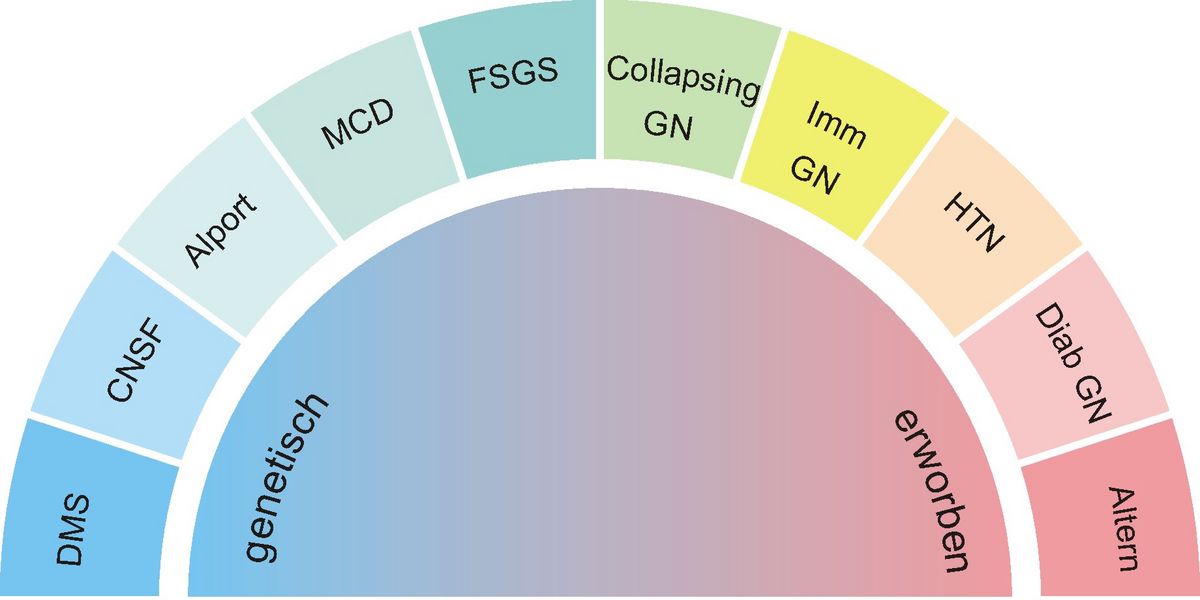
Our research group focuses on glomerular podocytes. These are cells that - similar to nerve cells - form a highly complex, strongly branched network of cell processes and remain incapable of division (postmitotic) throughout the rest of their life. The podocytes are anchored to the glomerular capillary loops by their cell processes. The podocytes are anchored to the glomerular capillary loops with their cell processes. Between the foot processes is the slit diaphragm, a unique cell connection found only in these cells, which acts like a sieve to prevent blood proteins from being excreted in the urine. 80% of cases of terminal renal failure are thought to be due to glomerular disease and the extent of podocyte damage is decisive for the course of the disease. The “podocytopathies” range from rare genetic diseases (e.g. nephrotic syndrome of the Finnish type) to common diabetic nephropathy.
In molecular nephrology, we investigate which genes are important for the development of the unique podocyte morphology, how they interact with each other and what happens when these genes are missing or dysregulated. To this end, we use podocyte cell lines that are analyzed using biochemical, molecular and cell biological methods. We also use genetic mouse models in which we can investigate the functions of individual genes in vivo. The aim of our work is to gain a better understanding of the molecular basis of podocytopathies in order to develop new therapeutic approaches.
Organization chart
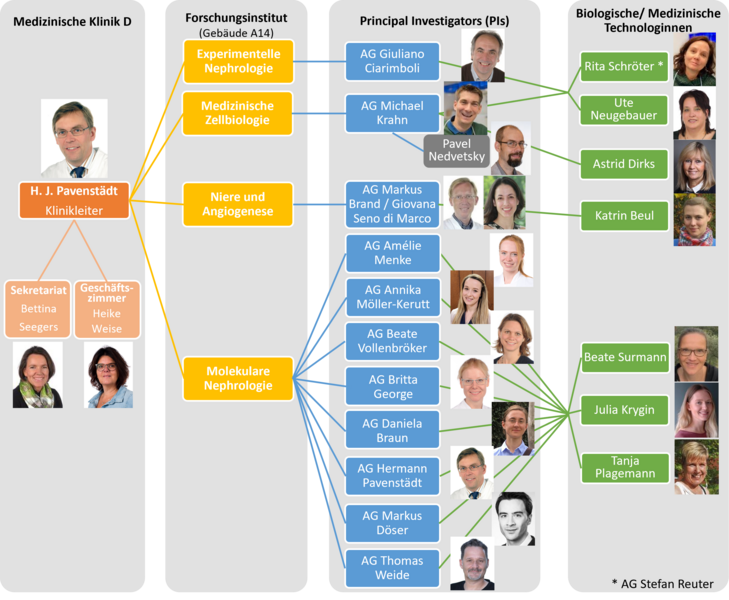
An overview of the Molecular Nephrology working groups and neighboring working groups of Medical Clinic D in Research Building A14.
Next to the Molecular Nephrology, Experimental Nephrology (Experimentellen Nephrologie), Medical Cell Biology (Medizinischen Zellbiologie) and the working group Kidney and angiogenesis (AG Niere und Angiogenese) there are also some research departments of the Medical Clinic B (Medizinischen Klinik B (Gastroenterologie, Hepatologie, Endokrinologie, Klinische Infektiologie)) of Prof. Trebicka in the same building.