
The Institute of Molecular Tumor Biology (IMTB) is an experimentally oriented medical research institute. Our work aims to understand the molecular foundations of cell differentiation, tumor development, and immune cell function, and to translate this knowledge into the development of innovative therapeutic strategies.
A major focus of our research is the analysis of cellular programs that determine health and disease. Changes in gene regulation, epigenetic organization, and signal transduction play a decisive role in these processes. We focus particularly on cells of the innate immune system, such as macrophages and neutrophils, as well as on hematopoietic stem and progenitor cells. Using disease models from oncology and infectious biology—including leukemia and other tumor types—we investigate how disrupted regulatory mechanisms contribute to disease development.
A central research focus of the IMTB is on transcription factors—proteins that specifically control the expression of target genes—and their role in governing hematopoietic cell fate. In close interaction with epigenetic mechanisms, they regulate self-renewal, differentiation, and immune cell function. To study these regulatory networks, we employ cutting-edge next-generation sequencing, functional genetic screens, and transgenic model systems, working closely with the university clinical environment. In addition, our research questions are addressed through collaborations within large-scale research consortia, such as the TRR332, a DFG-funded collaborative research center dedicated to a deeper understanding of neutrophil biology.
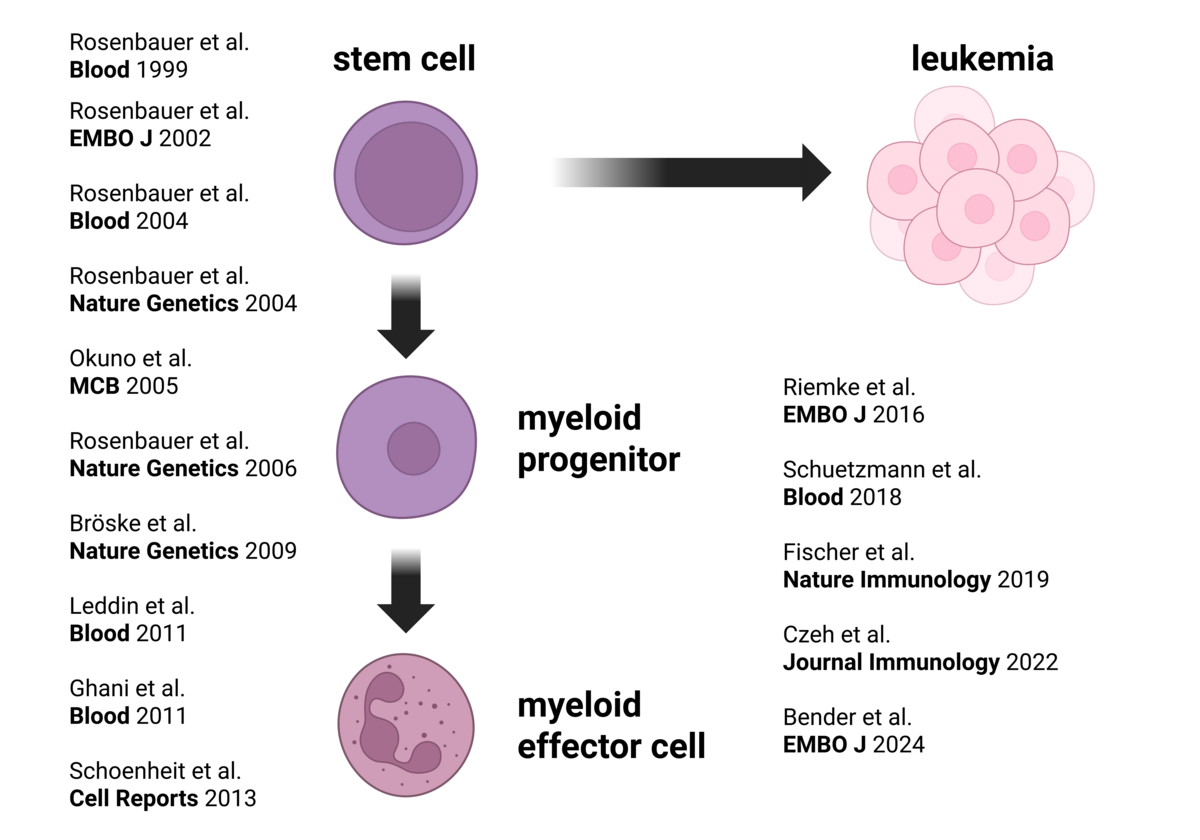
A particular focus of our work is the transcription factor PU.1, which is essential for the development and function of myeloid and lymphoid cell lineages and allows us to address fundamental questions of cellular self-renewal, differentiation, and function. For example, we recently demonstrated for the first time that PU.1 limits excessive immune responses through epigenetic control mechanisms, thereby preventing tissue damage. Furthermore, our ongoing studies show how the loss or dysregulation of key transcription factors like PU.1 can activate alternative survival programs in cancer cells. These insights provide fundamental understanding of hematopoiesis and open new avenues for targeted therapies in cancer and infectious diseases.
Research focus and selected key publications from our lab