
KI-AIM2: Secure Data Spaces for the Medicine of Tomorrow
Whether laboratory results, diagnoses, or medical reports – enormous volumes of data are generated every day in modern medicine. These data represent a valuable resource for research and innovative AI-driven applications. At the same time, they are among the most sensitive categories of personal information. The joint research project KI-AIM2 aims to make this data resource securely usable. Through intelligent anonymization and the AI-based generation of realistic synthetic datasets without reference to identifiable individuals, the project establishes a reliable foundation for trustworthy artificial intelligence in medicine.
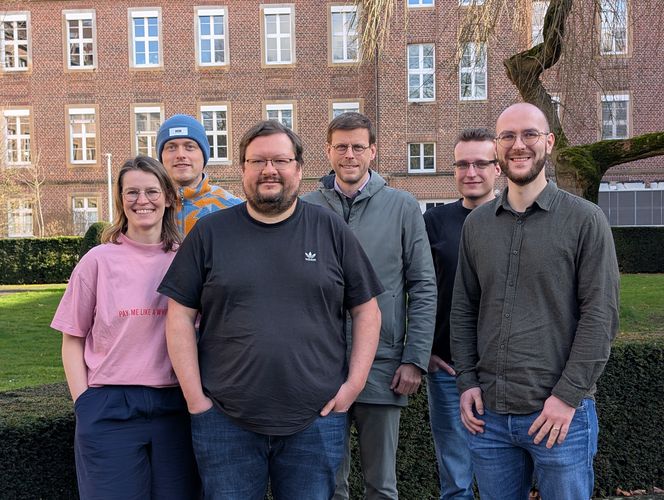
“We are faced with the challenge of preparing medical data in a way that makes it both compliant with data protection regulations and scientifically robust,” says Dr. Michael Storck, Head of the Medical Data Integration Center (MeDIC) at the Institute of Medical Informatics at the University of Münster and project coordinator of KI-AIM2. “Only when both aspects come together can real added value for research and healthcare be achieved.”
In the predecessor project KI-AIM, the technological foundation was laid with the privacy platform Cinnamon. The platform anonymizes structured medical data, can generate synthetic equivalents when needed, and automatically assesses both privacy risks and dataset usability. The software has been published as open source, ensuring transparency and enabling free use and further development.
An important partner in this process was the Skin Tumor Center (HTZ) at the Department of Dermatology at Münster University Hospital. From a clinical perspective, the center evaluated the platform’s functionality and research usability, defined the medical evaluation framework, provided relevant datasets, and validated the results. This ensured that the developed solutions are not only technically sophisticated but also scientifically relevant and applicable in practice.
With KI-AIM2, Cinnamon will now be further expanded both technically and conceptually. In the future, the platform will be connectable directly to hospital and health information systems via international standards that enable the secure digital exchange of health data between IT systems. This will significantly simplify integration into existing IT infrastructures. Another major focus lies on unstructured data: since a large proportion of clinical information exists in free-text form, new methods are being developed to automatically and securely anonymize medical reports and findings. In addition, an infrastructure is being established to continuously provide anonymized data for training AI applications.
KI-AIM2 is supported by an interdisciplinary consortium from academia, healthcare, and industry. In addition to MeDIC and the Skin Tumor Center in Münster, partners include the Berlin Institute of Health, the German Research Center for Artificial Intelligence (DFKI), and industry partners such as DH Healthcare GmbH and Health Data Technologies GmbH. Associated partners include the Technology and Methods Platform for Networked Medical Research (TMF) and the Medical Data Integration Center in Augsburg. Together, the partners aim to facilitate the secure exchange of medical data, accelerate research processes, and strengthen Germany and Europe as innovation hubs for artificial intelligence and data protection.
“If we want to translate medical knowledge more rapidly into better diagnoses and therapies, we need reliable and secure data,” Storck emphasizes. “KI-AIM2 creates precisely this foundation for the benefit of all patients.”
With the launch of KI-AIM2, the successful work of the predecessor project is being continued. The Münster site will receive approximately €950,000 in funding over a total period of five years from the Federal Ministry of Research, Technology and Space (BMFTR). “This long-term support enables us to develop sustainable software solutions,” says Storck. “We are creating a technical foundation that is intended to endure well beyond the project itself.”