
AI and Bioinformatics: Prof. Dominik Heider at Spring School 2026 in Hong Kong
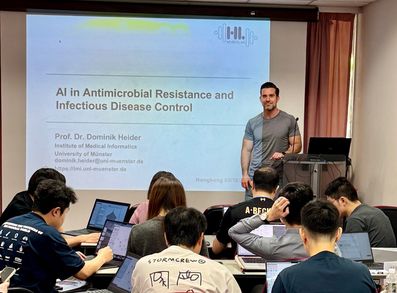
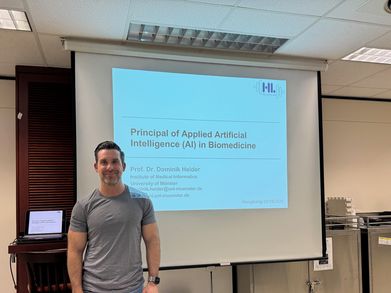
Prof. Dominik Heider was once again invited as a guest lecturer to the Faculty of Medicine at the Chinese University of Hong Kong (CUHK). As an expert in AI-driven methods for analyzing biomedical questions, he participated in this year’s Spring School, which took place from March 18 to 20, 2026.
The annual event, organized by the Institute of Microbiology at CUHK, focuses on current bioinformatics methods in microbial genomics as well as the application of artificial intelligence in biomedical research. The aim of the course is to provide participants with practical insights into modern bioinformatics tools and analytical approaches.
As part of the program, Prof. Heider first introduced fundamental concepts and models of machine learning. Using practical examples from clinical microbiology—such as the prediction of antimicrobial resistance—participants were able to apply the methods directly and deepen their understanding.
Another key focus was the potential of modern AI models in medicine. These can improve diagnostics, enable more targeted therapy selection, identify new disease subtypes, and generate prognostic insights into disease progression. Various types of medical data were analyzed, including clinical health data, imaging data, and omics data.
At the same time, the course addressed key challenges in applying AI in medicine: the complexity of genetic sequences, small sample sizes, highly imbalanced datasets, and the need for interpretable models whose results can have direct implications for patients. Data protection and the responsible use of sensitive health data were also central topics.
In the final session, participants developed their own analysis workflows and simple machine learning models using the open-source toolkit Orange, allowing them to put what they had learned into practice.